
A look at curiosity, development and the science behind children’s fascination with the natural
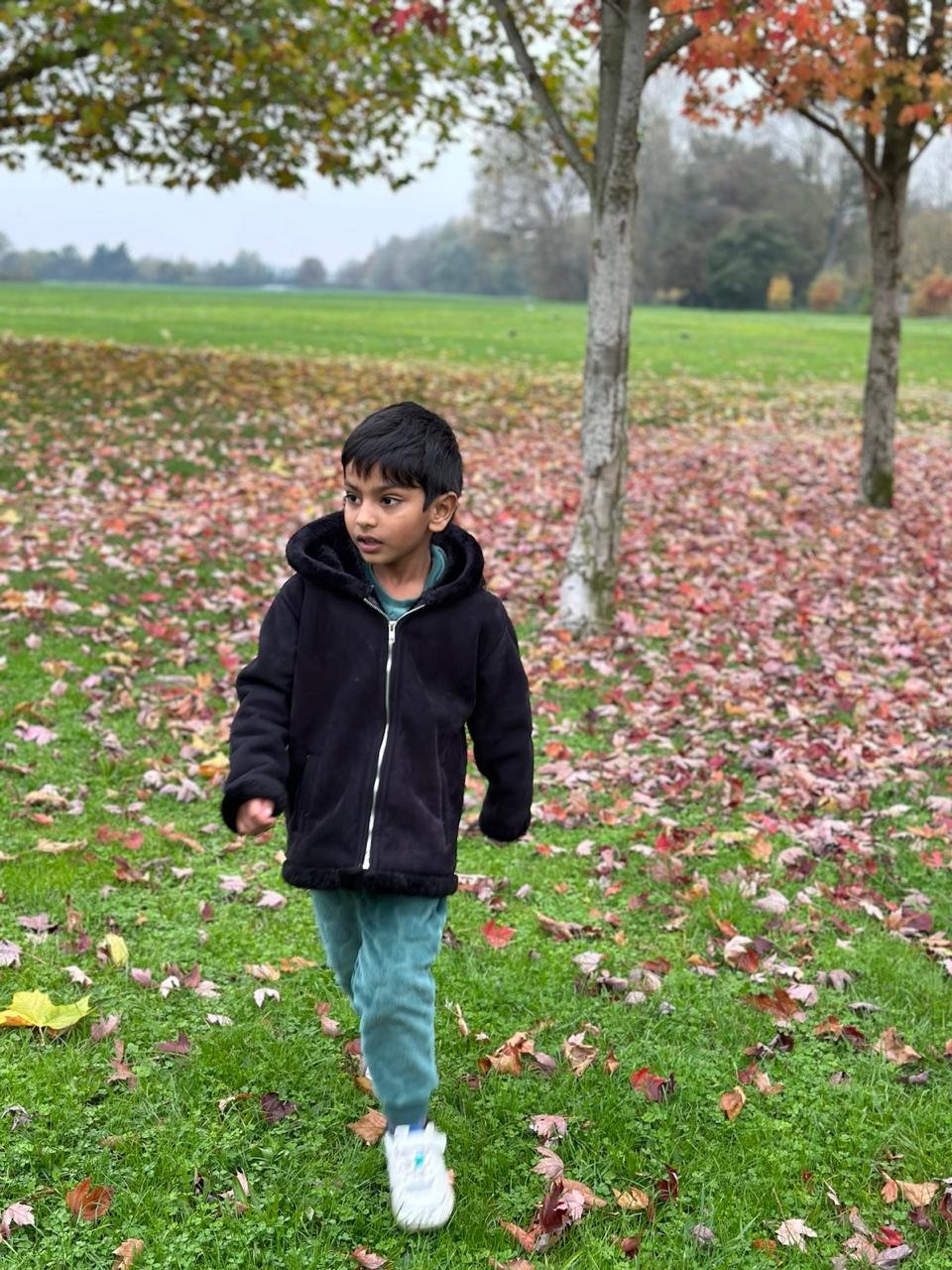
A walk through the park with a child rarely remains just a walk.
A red leaf appears.
Then a yellow one.
Then a very tiny one.
Before long, pockets are full of leaves, stones, sticks and mysterious objects that apparently must come home.
To an adult, these may look like ordinary objects.
To a child, they can be discoveries.
And there is some fascinating science behind that difference.
Children are natural explorers
During childhood, the brain is continuously building and refining its understanding of the world.
Children learn by observing, touching, comparing, asking questions and repeating experiences. A collection of leaves provides all of these opportunities.
Why is this one red?
Why is that one still green?
Why is one smooth while another feels rough?
Why are some leaves enormous and others tiny?
Without formally calling it “science”, the child is already practising some of the behaviours that scientific thinking requires: observation, comparison, classification and questioning.
Collecting creates patterns
Children often enjoy sorting objects.
The leaves might be arranged by colour, size or shape. One becomes the “best” leaf. Another belongs in a completely different group.
This apparently simple activity involves cognitive skills.
To categorise something, the brain must notice characteristics, recognise similarities and differences, and decide which features matter.
These are early foundations for understanding patterns and relationships.
Nature is full of sensory information
A leaf is not simply something to look at.
It has colour, texture, shape, smell and sometimes sound. Dry leaves crunch. Fresh leaves bend. Some surfaces are waxy; others are rough or soft.
Experiences involving several senses give children rich information about their environment and invite exploration in ways that a picture on a screen cannot completely reproduce.
And every new discovery creates another opportunity for a question.
But perhaps the most important part is curiosity
Adults sometimes feel pressure to have an immediate answer whenever a child asks “why?”
We don’t always need one.
A question can become an invitation to investigate together.
“Why did this leaf change colour?”
“I don’t know. What do you think?”
“Shall we find out?”
That small change turns a question into an exploration.
And perhaps that is what those pockets full of leaves really represent.
Not clutter.
Not something that needs to be hurriedly thrown away.
But a child noticing the world closely enough to find something ordinary fascinating.
Curiosity often begins with very small things. Sometimes, it begins with a leaf.